London
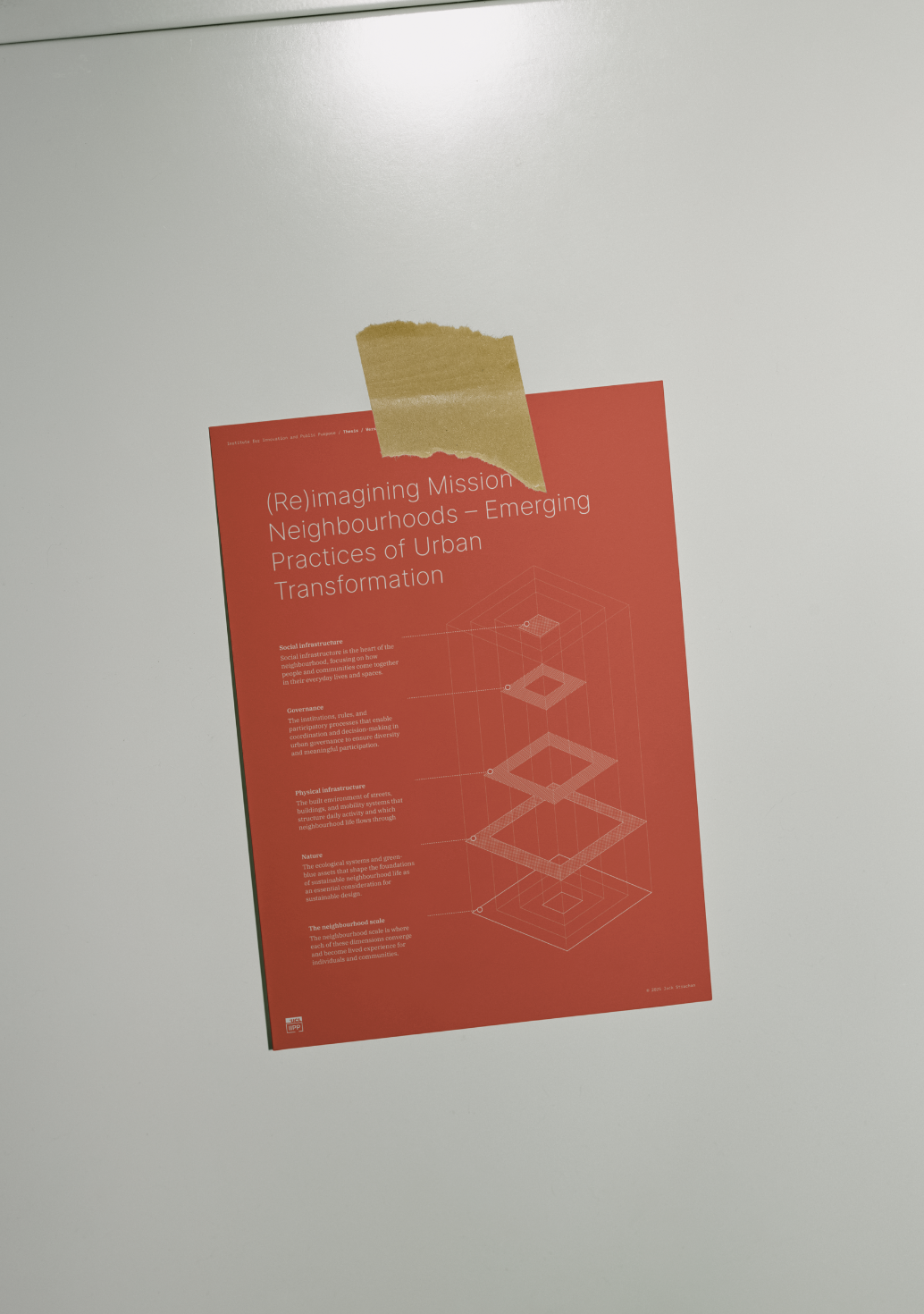
(Re)imagining Mission Neighbourhoods: Emerging Practices of Urban Transformation
Neighbourhoods are increasingly positioned as an effective scale for tackling technological,social, and ecological challenges. Yet despite decades of research and policy attention, urban development has struggled to deliver neighbourhoods capable of meeting the challenges of thetwenty-first century. Mission-oriented approaches highlight the role of transition intermediariesin bridging capability deficits within public organisations, but little is known about the practicesthrough which they design, adapt, and negotiate missions at the neighbourhood scale. This studyaddresses this gap by examining the practices of systemic, niche, and process intermediariesUsing a grounded theory methodology, it draws on 15 semi-structured interviews: four withstakeholders from mission-oriented neighbourhood initiatives in the UK, Belgium, Canada, andAustralia, and 11 with wider expert practitioners, alongside supporting document analysis.
The findings identify an emerging typology of four dimensions of practice – dynamic stewardship,shaping, sensemaking, and framing – articulated through nine interrelated routines thatreconfigure the socio-spatial dimensions of neighbourhoods. These practices foster civiccapacity, embed experimentation in everyday infrastructures, curate reflexive forms of evidence,and construct narratives that mobilise collective purpose, while also facing tensions aroundparticipation, data, and narrative capture. By grounding mission-oriented innovation in the sociospatial realities of neighbourhoods, the study extends scholarship on intermediaries and publicsector innovation. It shows how intermediary practices compensate for, but remain constrained bycapability deficits, underscoring the need for institutional reform if mission neighbourhoods are toachieve systemic transformation.